Published August 27, 2026
Why Your Neighbor’s Home Sale May Not Be a Good Measure of Your Home’s Value

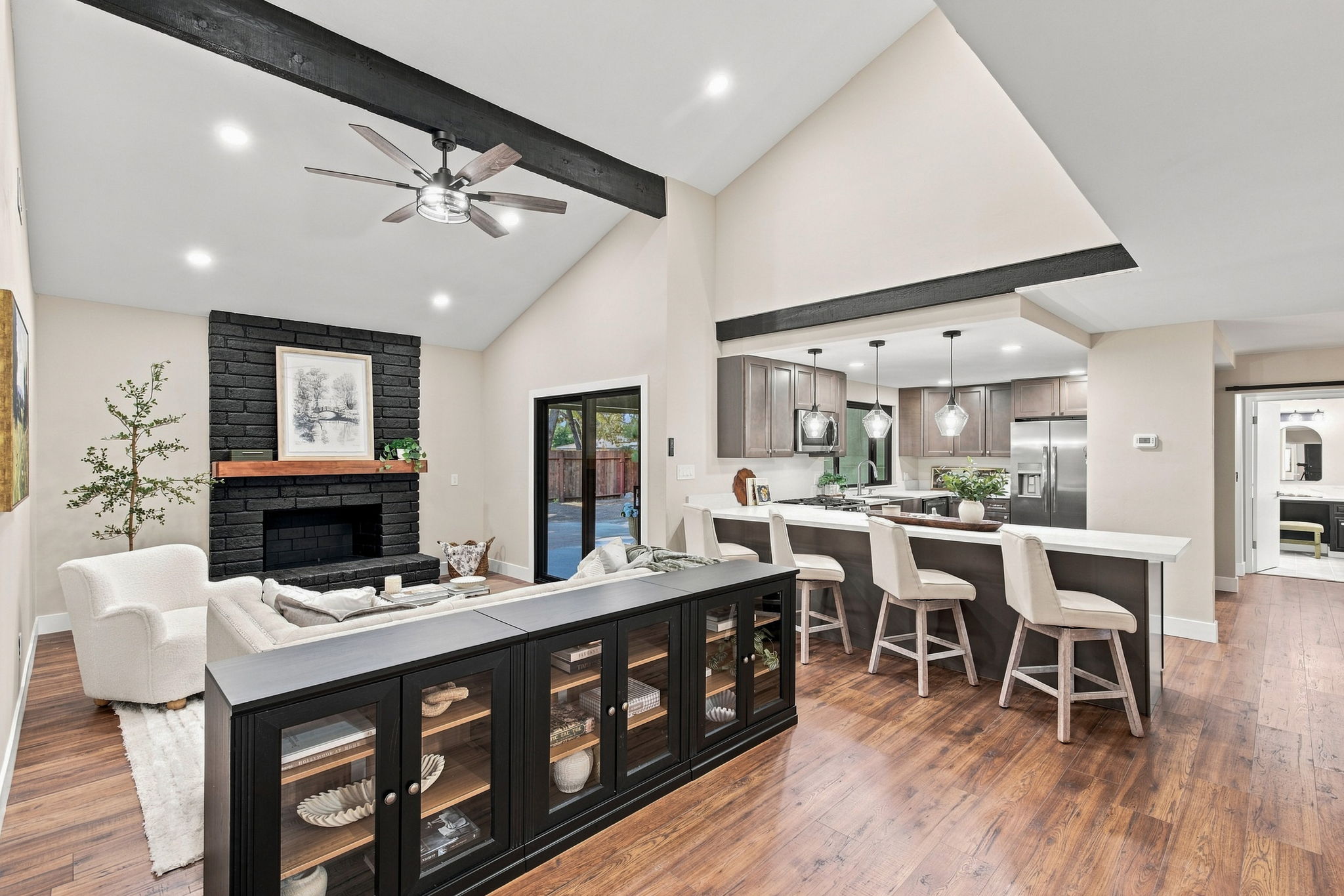
It’s one of the first things homeowners do when they’re curious about their home’s value: they look at what sold nearby.
If the house down the street just sold for $475,000, it’s tempting to assume your home must be worth about the same. Maybe yours is bigger, so you figure it should be worth more. Or maybe a neighbor tells you what their home sold for and suddenly that number becomes the benchmark for the entire neighborhood.
But in Bakersfield real estate, two homes that look very similar on paper can sell for very different prices.
A recent sale nearby can certainly provide useful information, but determining what your Bakersfield home is actually worth requires looking much deeper than the address, square footage and number of bedrooms.
Comparable Doesn't Always Mean Equal
Real estate professionals use comparable sales, often called “comps,” to help determine a home’s market value. Ideally, those properties are similar in location, size, age, features and condition and sold relatively recently.
But no two homes are exactly alike.
Even within the same neighborhood, there may be differences that have a meaningful impact on what buyers are willing to pay. That’s why an experienced Bakersfield Realtor doesn’t simply pull the three closest sales and average the prices.
The details matter.
Condition and Updates Can Make a Big Difference
Imagine two nearly identical homes located around the corner from one another.
One has an updated kitchen, newer flooring, fresh interior paint and bathrooms that have been remodeled. The other still has its original finishes and needs some deferred maintenance.
They may have the same floor plan and nearly identical square footage, but buyers aren't necessarily going to value them the same way.
Condition also goes beyond cosmetic updates. The age of the roof, HVAC system, windows, appliances and other major components can influence a buyer’s perception of value.
There’s an important distinction here, too: homeowners don't always get back every dollar they spend on improvements. A $50,000 renovation doesn't automatically add $50,000 to the sale price. The question is how much those improvements matter to buyers in that particular price range and area.
Lot Location Matters More Than Many Sellers Realize
Two homes can be located in the same subdivision and still have very different lot characteristics.
One may sit on a quiet cul-de-sac while another backs to a busy road. One may have an oversized corner lot, while another has a smaller backyard. Some buyers may pay more for additional privacy, a larger yard, a view or a particularly desirable lot placement.
There can also be differences in parking, driveway size, RV access and outdoor usability.
When evaluating Bakersfield home values, those factors shouldn't be ignored simply because two houses share the same neighborhood.
Pools, Shops and Other Features Aren't Created Equal
In Bakersfield, certain property features can make one home stand apart from another.
A swimming pool can be particularly attractive in our climate, but the value it adds depends on its age, condition, design and the home’s overall price range.
The same is true for a shop, RV parking, outdoor kitchen, owned solar system, three-car garage or larger lot.
And sometimes it isn't simply about whether a feature exists.
A professionally built shop with electrical service and easy vehicle access isn't necessarily comparable to a small backyard shed. A well-maintained pool with attractive landscaping may be viewed differently from an older pool that appears to need significant work.
When comparing properties, the quality and usability of those features matter just as much as checking a box that says the home has one.
Solar Can Complicate Comparisons
Solar is another area where Bakersfield homeowners need to look beyond the surface.
If your neighbor’s property had solar, was the system owned outright? Was there a loan attached to it? Was it leased? What were the terms?
Those details can affect how buyers evaluate a property and may even influence the transaction itself.
Simply saying, “Their house had solar and mine does too,” doesn't necessarily make the two properties directly comparable.
The Sale Price Doesn't Always Tell the Whole Story
Here is something many homeowners don't realize: the number recorded as the final sale price may not tell you everything about the deal.
Suppose a home sold for $500,000, but the seller agreed to provide a substantial credit toward the buyer’s closing costs or interest-rate buydown.
Another home may have sold for $490,000 with little or no seller concession.
Looking only at the headline sale prices could make the first property appear to have performed significantly better, even though the economics of the two transactions may be much closer.
Financing can matter, too. Conventional, FHA, VA and cash transactions may come with different circumstances, and the terms of an individual offer can influence how a seller evaluates it.
This is one reason professional real estate analysis goes beyond simply searching recent sold prices online.
Timing Can Change Everything
Real estate markets aren't static.
A home that sold six months ago may have entered the market under very different conditions than a home being listed today.
Inventory may have increased or decreased. Mortgage rates may have changed. Buyer demand may be stronger or weaker. There may be more competing homes available in a particular price range.
Even seasonality can play a role.
That means a sale that was an excellent comparable several months ago may need to be weighed differently when determining a home’s current market value.
Your Neighbor's Pricing Strategy Matters, Too
The final sale price also doesn't tell you how the property got there.
Did the home sell immediately after receiving multiple offers?
Did it originally list much higher and go through several price reductions?
Was it on the market for months?
Was it professionally staged and marketed?
Did the sellers need a quick sale, or were they willing to wait for a particular price?
Understanding the story behind a comparable sale can provide valuable context that isn't visible when you're simply looking at the sold price on a real estate website.
So, What Is Your Bakersfield Home Really Worth?
Your neighbor's sale is absolutely worth paying attention to. It may even be one of the best comparable properties available.
It just shouldn't automatically become the answer.
Determining the value of a Bakersfield home means looking at the entire picture: recent comparable sales, current competition, condition, upgrades, lot placement, square footage, pools, shops, RV parking, solar, seller concessions, financing, days on market and current buyer demand.
That's also why automated home-value estimates and quick online searches have limitations. They can process data, but they don't always understand the differences between two properties the way someone familiar with Bakersfield real estate can.
If you're considering selling your home, or you're simply curious about what it may be worth in today's market, The McCarty Group can provide a more detailed look at your property and the sales that are actually relevant to it.
With decades of experience helping Bakersfield homeowners buy and sell real estate, our team understands that pricing a home isn't about finding one nearby sale and copying the number. It's about understanding what buyers are paying for, what they're comparing your home against and where your property fits into the current Bakersfield real estate market.